Finance Knowledge
Finance & investing knowledge explainers and foundational concepts — from price & volume and P/E valuation to market structure, money management, and trading psychology, systematically building your investing knowledge base.
17 articles
 NEW
NEWWhat Is Market Breadth? A US-Stock Guide to Reading the Internals
Market breadth measures how broadly stocks participate in a move, often revealing the true health of an index. This guide walks through the Advance-Decline Line, McClellan Oscillator, new highs/lows, equal-weight vs cap-weight ETFs, and Zweig breadth — using US equities as concrete examples.
 NEW
NEWUS Stock Macro Playbook: Read the Climate Before You Pick a Stock
A swing trader's macro playbook. We break down CPI, PCE, DXY, VIX, the 10-year Treasury yield and yield curve, NFP, ISM PMI, the FOMC dot plot, and the CME FedWatch tool—then show how they interlock and build a pre-market checklist you can use before every entry.
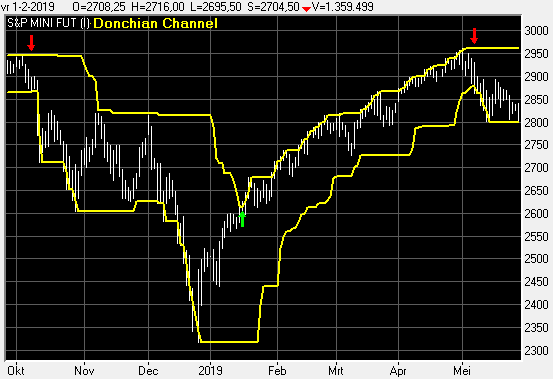
Gold Pullback Entry System: The Four-Step Method, Fibonacci, and Pattern Confirmation
Condense trading decisions into four consecutive steps: trend break, pullback, hold, act. Provides an in-depth explanation of how to apply the 0.382, 0.5, 0.618, and 0.786 Fibonacci retracement levels, the confirmation mechanisms of wick rejections and engulfing patterns, and a complete entry decision tree.

A Day in the Life of a Gold Day Trader: From Pre-Market Prep to Post-Market Review
What does a day in the life of a gold day trader actually look like? From morning market research, to watching the London open, to entering positions during the New York session, and finally reviewing trades after the close — here is a full breakdown of one trading day's workflow.
The Mathematical Truth About Martingale Strategy: Why It Is Doomed to Bankruptcy
The Martingale strategy (doubling bets after losses) guarantees recovery in theory, but guarantees bankruptcy in reality. This article uses mathematics to prove why Martingale is destined to fail, and compares the risks across three types of EAs.
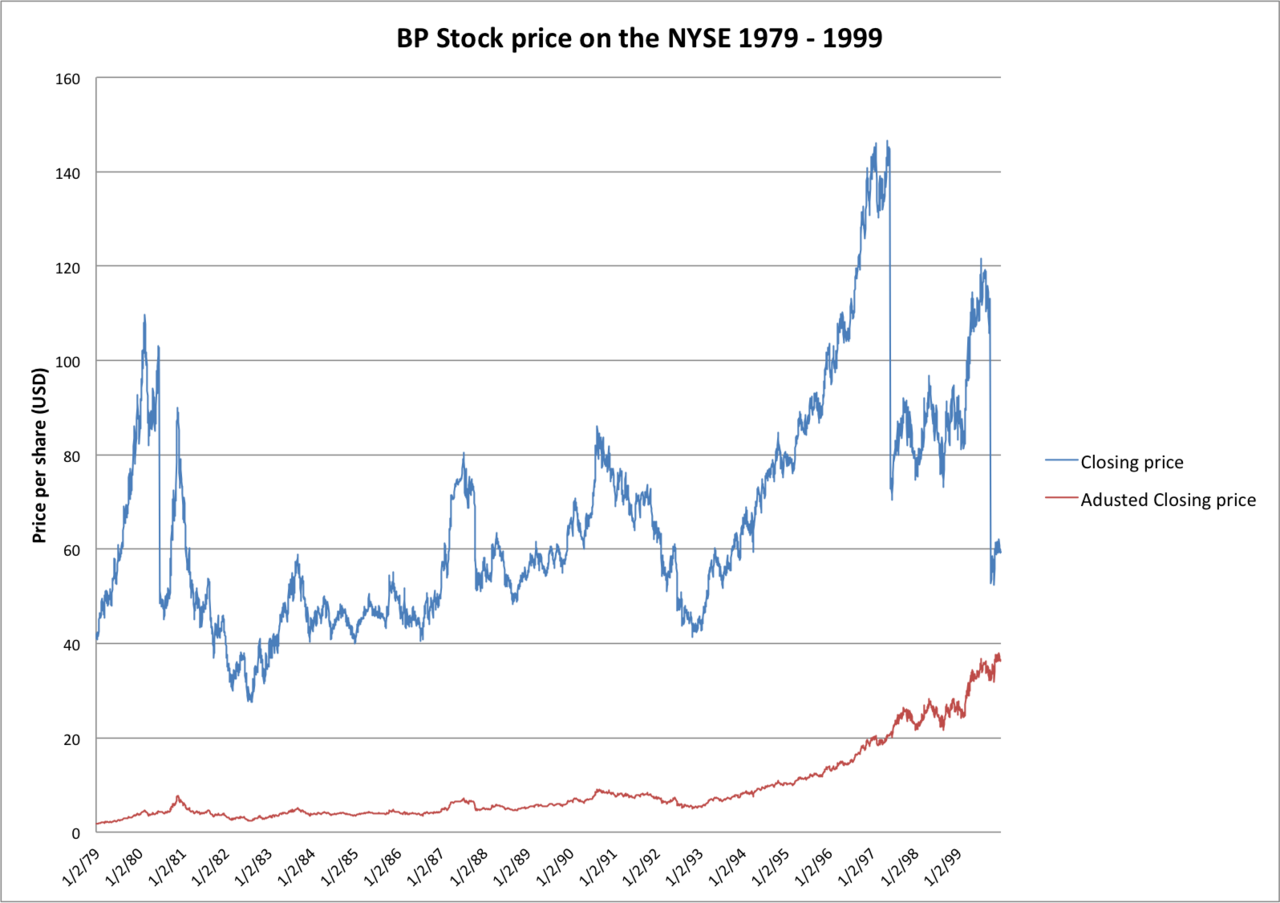
Complete Guide to Gold Market Structure: HH/HL, BOS/MSS, Bollinger Bands, and Multi-Timeframe Analysis
A systematic breakdown of the core language of gold market structure: using HH/HL/LH/LL to identify trends, BOS/MSS to judge breakouts and reversals, Bollinger Bands to measure volatility, the layered application across four timeframes, and how candlestick patterns confirm entry timing.

Gold Trading Terminology Glossary: From Structural Language to Platform Operations
A comprehensive glossary of all terminology used in gold intraday trading, organized by topic: trend structure, moving average indicators, candlestick patterns, entry strategies, order types, money management, macro indicators, platform operations, and trading psychology.

Trading Journal & Daily Trading Routine: Building Your Growth Loop
A trader without a trading journal is like a traveler without a map. This article walks through the complete design of a trading journal, pre-entry checklist, daily trade limit, loss circuit-breaker mechanism, and how to build a continuous improvement loop from your mistakes.

The Root Cause of Trading Failures: The Collapse and Reconstruction of Discipline
The root cause of all trading failures can be summed up in one word: discipline. This article summarizes a complete trading methodology, from five signs of consistent profitability to the ultimate trading philosophy—calm, humility, and continuous improvement.

The Truth About EA Automated Trading: Why Most Traders End Up Returning to Manual
EA automated trading sounds appealing, but the reality is harsh. This article takes an in-depth look at the four motivations behind EAs, the three main types, the deadly trap of curve fitting, and why manual trading remains the mainstream.

Gold Trading Session Complete Guide (GMT+8): London, New York, and Asia
Gold exhibits fundamentally different volatility characteristics across different trading sessions. This article provides a detailed breakdown of the key features of the three major trading sessions, the optimal strategies for each, and how intraday traders can plan their trading windows.

Eight Common Mistakes in Gold Trading and Real Loss Cases
From eight common mistakes to four real loss cases, this article uses hard-learned lessons to show you: most traders fail not because their technique is poor, but because they keep repeating the same mistakes.

The Complete Gold Money Management Handbook: Position Sizing, Stop-Loss, RR, TSL, and Rebate
From position sizing to stop-loss discipline, from risk-reward ratios to trailing stop-losses, from rebate cashback to staged account growth—this is a complete practical handbook for gold money management.

The Mental Discipline of Gold Traders: From Mindset Building to Emotional Management
In the world of intraday gold trading, what truly keeps traders surviving in the long run has never been magical indicators or guaranteed-win strategies, but rather a simple, executable, and repeatedly verifiable discipline framework. This article deeply breaks down the three root causes of trading psychology and their practical response methods.

Trader's Growth Roadmap: Four Stages from Beginner to Consistent Profitability
A trader's growth is divided into four stages: unconscious incompetence, conscious incompetence, conscious competence, and unconscious competence. This article breaks down the characteristics and goals of each stage, along with how to transition to the next one.
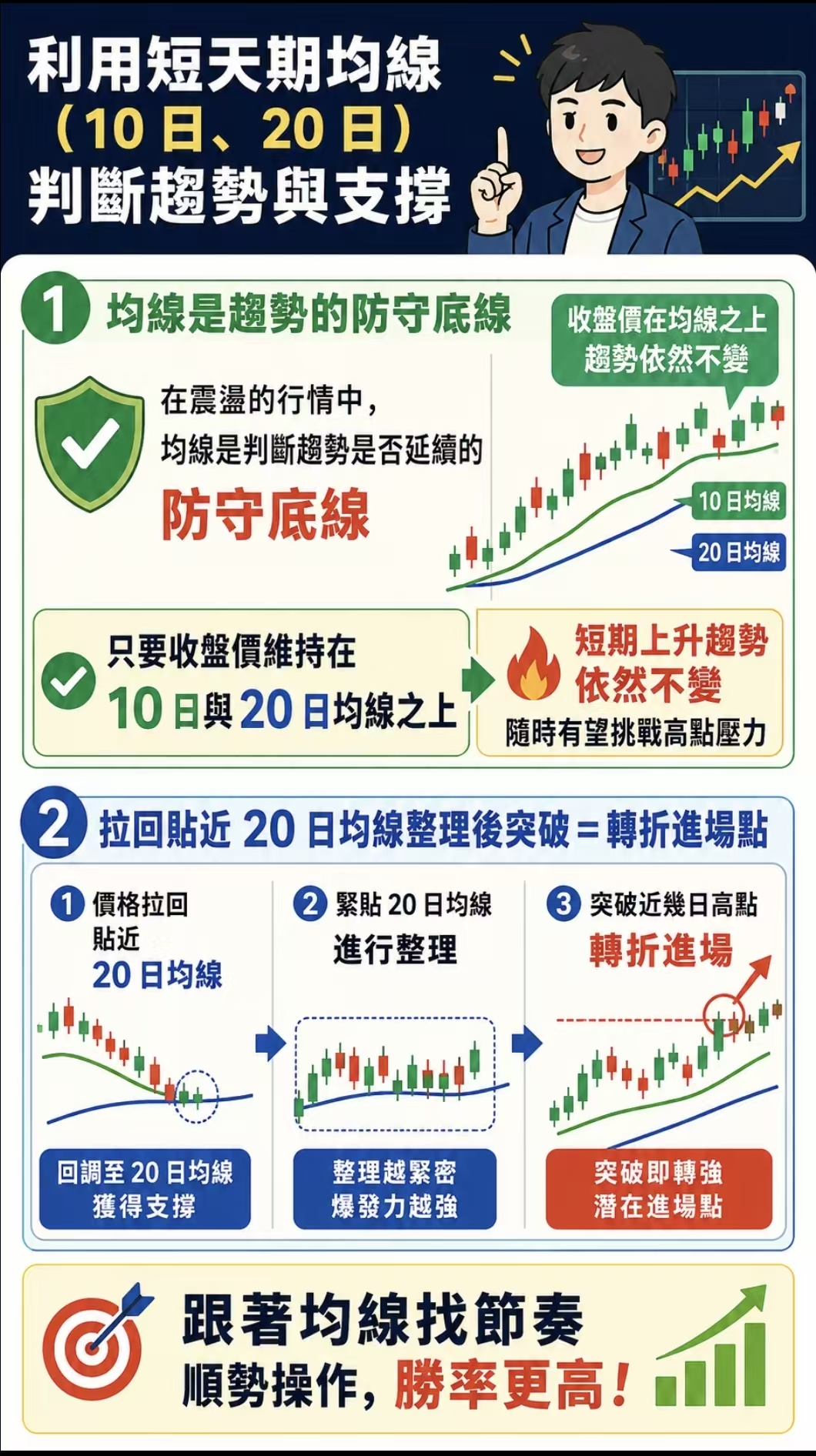
Complete Guide to Moving Average Trading Strategies: Using 10/20-Day MAs to Identify Trends + Dual Stock-Selection Criteria
Use 10/20-day moving averages to identify short-term trends and support levels, and master the three-step entry method of "pullback → consolidation → breakout." Then apply the dual criteria of "relative strength + sufficient consolidation" to select truly worthwhile targets. By combining both frameworks, build a complete SOP from stock selection to entry.

Complete Guide to Options Flow Analysis: How to Use Open Interest and Put/Call Ratio to Find Support and Resistance
A step-by-step breakdown of the four core dimensions of options flow analysis: using the P/C Ratio to gauge market sentiment, Open Interest to locate support and resistance levels, Volume-to-OI ratios to distinguish new capital from existing positions, and IV skew along with term structure to forecast volatility. Combined with a practical trading framework, this guide lets you apply these tools immediately to your trading decisions.